
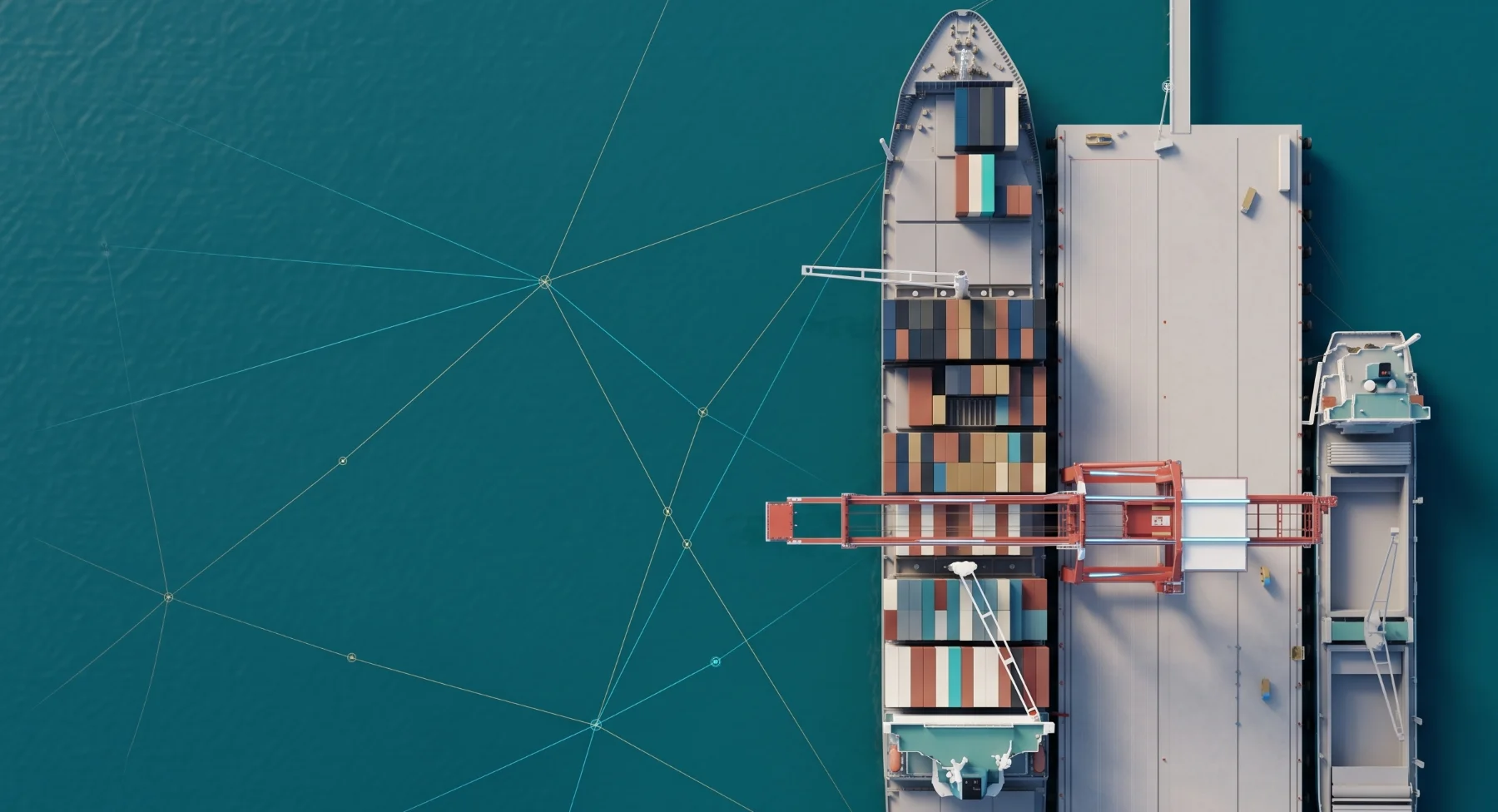
Two ways to reach Lae from Asia
There are really only two models. On a direct service, your container is loaded at the Asian origin port and stays on the same vessel until it is discharged at Lae. On a transhipment routing, the container is carried to a hub, discharged, stored and then loaded onto a second vessel, often a smaller Pacific feeder, for the final leg.
Direct services are faster and involve fewer lifts, which means less handling damage and less chance of your box being left behind. Transhipment offers more origin ports and more sailing options, and is sometimes cheaper. Neither is automatically better. The right choice depends on where your supplier is and how much schedule risk you can tolerate. For the wider context, see our complete guide to shipping to Lae.
From China and North Asia
North Asia to PNG has become better served in recent years. In August 2025, Swire Shipping upgraded its North Asia Express (NAX) service to fixed-day weekly sailings on a rotation of Shanghai, Ningbo, Nansha, Hong Kong and Lae. Weekly frequency matters: a missed cut-off costs you a week, not a fortnight.
ANL, the CMA CGM group's Oceania brand, also runs a service linking North-East Asia with the Pacific Islands that it describes as having more direct calls in China and shorter transit times to PNG. Beyond these, a lot of Chinese cargo still moves via Hong Kong or South-East Asian hubs, particularly from smaller Chinese ports.
If your supplier is near Shanghai, Ningbo or the Pearl River Delta, ask your forwarder to quote a direct option alongside any transhipment routing and compare the total door-to-door time, not just the sea days.
From South-East Asia
Swire's Pacific Weekly Express (PWX), launched in February 2023, links South-East Asia with Papua New Guinea, the Solomon Islands, New Caledonia and Fiji on a weekly schedule. Maersk runs two vessels on an 18-day rotation from its hub at Tanjung Pelepas in Malaysia, calling Port Moresby, Noro in the Solomon Islands, Lae, Madang and Wewak, with feeders to Kimbe and Rabaul.
Singapore, Tanjung Pelepas and Port Klang act as collection points for cargo from Indonesia, Thailand, Vietnam, India and beyond. If your supplier is in, say, Ho Chi Minh City or Surabaya, your container will almost certainly change ships at one of these hubs.
How hub transhipment works, and where it goes wrong
At the hub, your container waits in the terminal for its connecting vessel. That dwell time might be a couple of days or more than a week, depending on how well the two services line up. The risks are predictable:
- Rollovers. If the connecting vessel is full or running late, your box can be rolled to the next sailing. On a fortnightly feeder, that's a two-week delay.
- Blank sailings. Carriers occasionally cancel a sailing altogether and consolidate cargo onto the next one.
- Visibility gaps. Tracking can go quiet between discharge at the hub and loading on the feeder. Ask your forwarder to confirm the connecting vessel as soon as it's allocated.
Build a buffer into your stock planning for any transhipped cargo, and keep an eye on free time at destination; rolled cargo often arrives alongside other delayed boxes, which is when demurrage and storage charges start to bite.
Planning around transit time
Carriers publish their own transit estimates, and they change with every schedule revision, so treat any single number with caution. As a working rule, direct services from southern China or the main South-East Asian hubs are the quickest option, while cargo from secondary ports that needs a hub connection can take several weeks longer door to door. When you compare quotes, ask each forwarder for the routing, the connecting port and the expected transhipment dwell, not just a headline transit.
Working with Asian suppliers
Choose your Incoterms deliberately
Many Asian suppliers quote CIF or CFR by default, which means they control the booking. That is convenient, but you lose visibility of the routing and can be hit with inflated destination charges in Lae. Buying FOB and appointing your own forwarder gives you more control. Either way, remember that PNG Customs assesses duty on the CIF value, so the freight and insurance component forms part of the value your duty and GST are calculated on. Our guide to PNG import duty, excise and GST walks through the maths.
Get the paperwork right at origin
Commercial invoices from Asian suppliers are a common source of clearance delays: vague descriptions, missing unit values or values that don't match the payment trail. PNG Customs asks for bank transfer documents and valuation evidence alongside the invoice, so invoices need to reconcile with what you actually paid. Use our shipping documents checklist as a brief for your supplier.
Packaging and labelling
Solid wood packaging must meet ISPM 15. Food products need English labelling and, in most cases, a NAQIA import permit before shipment. See our NAQIA requirements guide and our list of prohibited and restricted imports before you place an order for anything unusual.
LCL from Asia
Consolidators run regular LCL services from major Chinese and South-East Asian hubs to PNG. For smaller importers, this is often the most practical way to buy from Asia. Just be aware that destination LCL charges in Lae can be significant relative to the ocean freight, and that your cargo is only available once the whole consolidation has been unpacked. Our FCL vs LCL comparison explains when it's worth stepping up to a full container.
Frequently asked questions
Is there a direct shipping service from China to Lae?
Yes. Swire Shipping's North Asia Express calls Shanghai, Ningbo, Nansha and Hong Kong before Lae on a weekly schedule since August 2025. Other carriers link Chinese ports to PNG, some directly and some via hubs.
Which Asian hub is best for cargo to PNG?
It depends on the carrier. Singapore, Tanjung Pelepas and Port Klang are the main South-East Asian collection points, while Hong Kong serves southern China. The best hub is the one your chosen carrier connects to Lae most reliably.
Does the freight cost affect my PNG import duty?
Yes. PNG Customs assesses duty on the CIF value, which includes cost, insurance and freight. Higher freight increases the duty and GST base.
Should I buy FOB or CIF from my Asian supplier?
FOB gives you control of the routing and the destination charges through your own forwarder. CIF is simpler but can hide inflated charges at Lae. Many regular importers move to FOB once volumes justify it.

Wade Miller
Senior Air Freight Writer, Sydney
Wade has spent more than 20 years in freight, from cargo terminal ramps to forwarding operations and customs documentation, working with importers and exporters across Australia and the Asia-Pacific. He writes practical guides on rates, paperwork and the rules that affect shipments, and reviews them against primary sources such as customs authority publications and carrier notices.
Related guides
Back to the complete guide to shipping to Lae
This guide is general information based on publicly available sources at the date shown. Rules, rates and schedules change, so confirm details with PNG Customs, NAQIA, your carrier or a licensed customs broker before you ship. Spotted something out of date? Report a correction.