
Shipping internationally from Australia: what every business should understand first
Most freight problems aren't caused by the ship or the plane. They come from decisions made before the goods leave: the wrong terms of sale, a quote that left things out, a document that didn't match or a permit nobody applied for. This overview explains how the pieces fit together, and where to read more.
By Wade Miller. Reviewed .
How international freight actually works
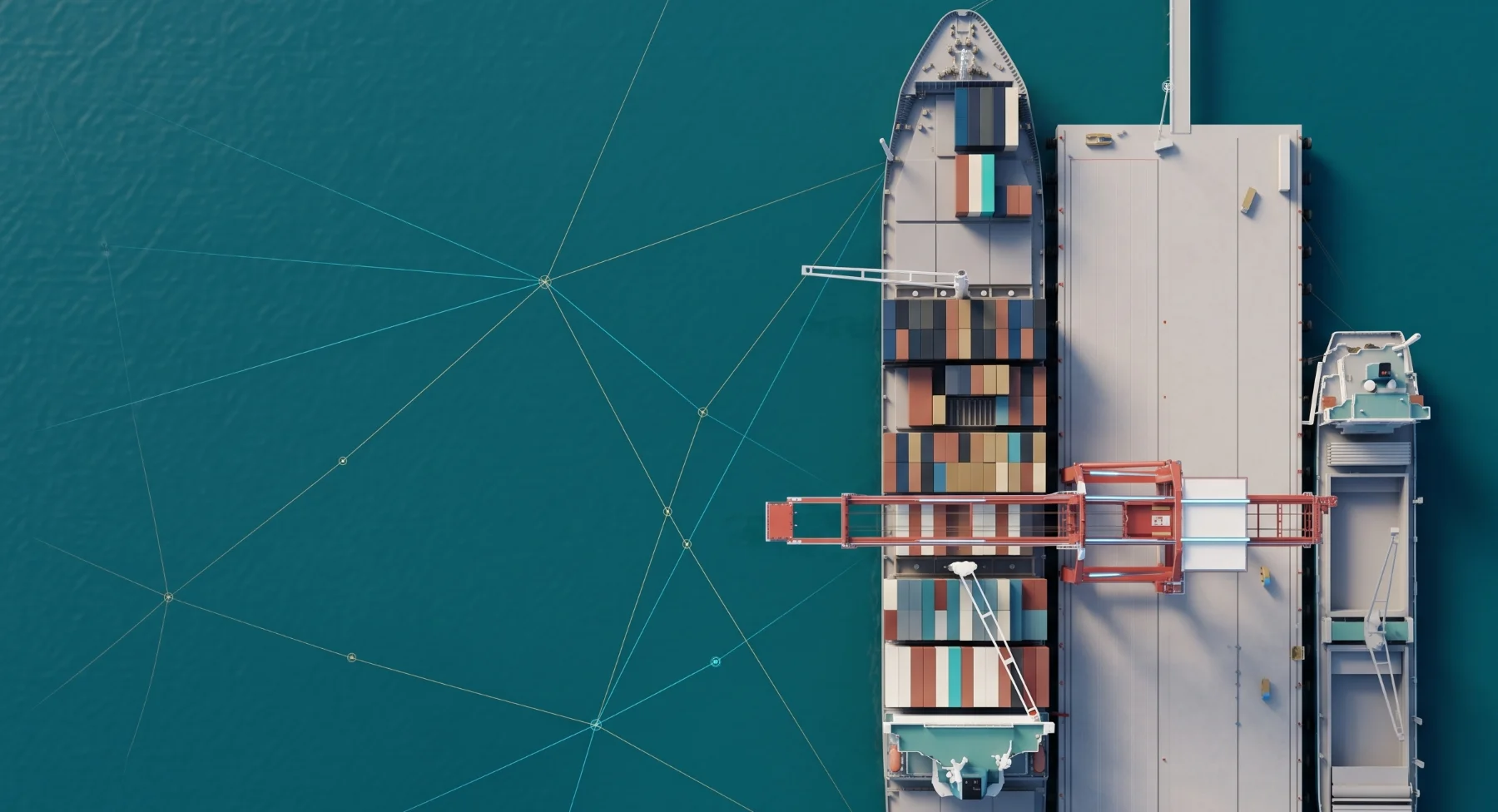
Every international shipment, whether it's a carton of spare parts flown to Port Moresby or forty containers of building materials sailing for Lae, involves the same cast. The shipper sells and sends the goods. The consignee receives them. A carrier, the airline or shipping line, physically moves them. A freight forwarder arranges the journey on the shipper's or buyer's behalf, and a customs broker deals with the border agencies at each end. On a small shipment one company may wear several of those hats; on a big one they may all be different businesses in different countries.
Who does what, and who pays for what, is set by the Incoterm in the sale contract. Under EXW or FCA the buyer takes on most of the journey; under CIF or DAP the seller does. The Incoterms 2020 rules are published by the International Chamber of Commerce, and getting them right matters more than most people think, because the Incoterm quietly decides who controls the booking, who carries the risk at sea and, in many countries, what value the destination's duty is calculated on. If you only take one habit from this site, make it this one: agree the Incoterm and the named place before you agree the price.
Choosing a mode and a route
Air freight buys speed and security at a price. Sea freight buys capacity and economy at the cost of time and a longer chain of handovers. As a rough rule, high-value, urgent, perishable or small consignments fly; heavy, bulky, low-value or regular stock sails. Plenty of Australian businesses do both, flying the urgent part of an order and shipping the balance.
The route matters as much as the mode. Our Pacific coverage shows why. Papua New Guinea looks close on a map, but there's no road between Port Moresby and Lae, so landing cargo at the wrong port can add a coastal voyage or an air leg nobody budgeted for. Lae handles close to half of PNG's sea freight and is the gateway to the Highlands, which is why most importers supplying Morobe and the interior rely on established shipping services to Lae rather than routing through the capital. We've mapped that trade in detail in our complete guide to shipping to Lae, including the main Australian load ports and direct and transhipment routes from Asia.
Within sea freight, the next decision is equipment. A full container is sealed at origin and can go straight to your door; a shared, or LCL, container is cheaper for small volumes but gets unpacked at a depot at destination, with extra fees and delays. Our FCL vs LCL comparison shows where the crossover usually sits, and for oversized equipment our guide to shipping vehicles and heavy machinery covers flat racks, breakbulk and RoRo.
What freight really costs
Freight is rarely priced on what your goods weigh on the scales. Airlines charge on the greater of actual weight and volumetric weight, which under the common IATA standard works out at one kilogram for every 6,000 cubic centimetres. Express couriers often use a tighter divisor. That's why a lightweight carton that's mostly air can cost as much to fly as something far heavier, and why packaging design is a genuine cost lever.
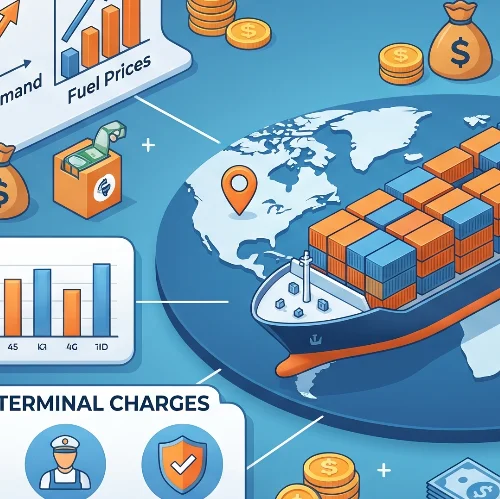
Sea freight in a shared container is priced per revenue tonne, the greater of one cubic metre or 1,000 kilograms. A full container is priced per box, however full it is. On top of the base rate sit surcharges that move on their own schedule: fuel, currency, security, peak season and periodic rate increases.
The costs that catch people out are usually at the destination. Terminal handling, delivery order fees, depot charges and, above all, demurrage, detention and storage can outweigh the ocean freight on a small shipment. Our breakdown of container shipping costs shows how to read a quote line by line, our guide to hidden shipping fees explains the charges that start ticking when the ship berths, and our advice on reducing shipping costs focuses on the savings that come from planning rather than haggling.
Paperwork: where most delays really start
Most freight problems are paperwork problems that show up at a port or an airport. The core set rarely changes: a commercial invoice with specific descriptions and values, a packing list that matches it, and a transport document, either a bill of lading or sea waybill for sea freight or an air waybill for air. Add a certificate of origin if the buyer is claiming a preferential tariff, and any permits or certificates the goods require.
On the Australian side, exports valued at more than A$2,000, or goods that need an export permit, generally require an export declaration lodged through the Australian Border Force's Integrated Cargo System. Your forwarder usually lodges it and passes the Export Declaration Number to the carrier before the cargo is accepted. Certain goods, including many food, plant and animal products, also need export certification from the Department of Agriculture, Fisheries and Forestry.
The rule that saves the most time is simple: every document should tell the same story. Descriptions, quantities, weights and values need to agree across the invoice, packing list and transport document, and values should match what was actually paid. Our shipping documents checklist shows what that looks like for a PNG import.
Customs at the other end
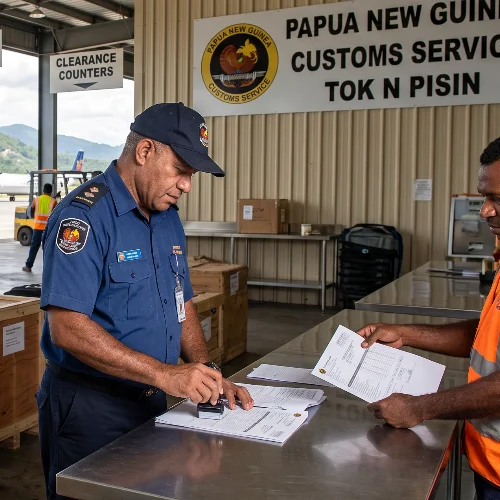
Clearing goods overseas follows a familiar pattern even when the forms differ. The importer registers with the local customs service, a licensed broker lodges an import declaration, customs checks classification, value and permits, duties and taxes are assessed and paid, and the goods are released. What changes from country to country is the detail: who can lodge, when, on what value duty is calculated and how fast payment is due.
PNG is a good illustration of why the detail matters. The importer must first be registered with the Investment Promotion Authority, the Internal Revenue Commission and PNG Customs, as our guide to registering as an importer in PNG explains. Entries can only be lodged by a licensed broker, but they can be lodged up to five working days before the goods arrive, which is the single biggest lever on clearance speed; see our step-by-step clearance guide. Duty is assessed on the CIF value, excise applies to goods such as vehicles and alcohol, and GST is charged at 10%; our guide to PNG import duty, excise and GST includes a worked example.
Biosecurity, dangerous goods and restricted items
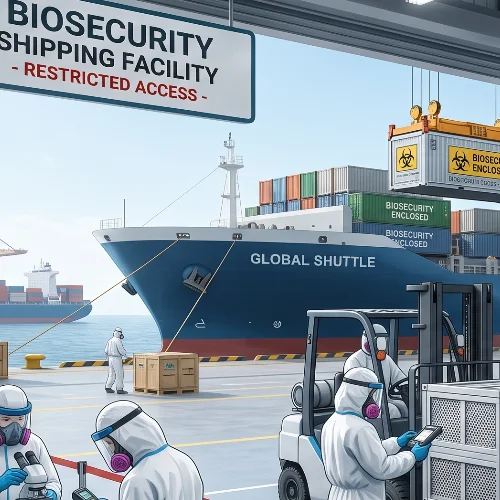
Australians know biosecurity from the import side, but many of our neighbours are just as strict. Solid wood packaging should meet the ISPM 15 standard, used machinery needs to leave Australia genuinely clean, and food, plant and animal products usually need a permit issued by the destination before they're shipped. In PNG, that authority is NAQIA; our NAQIA requirements guide covers permits, inspections and cleaning standards.
Dangerous goods are a separate discipline. Lithium batteries, aerosols, paints, fuels and many chemicals must be classified, packed, marked and declared under the IATA Dangerous Goods Regulations for air or the IMDG Code for sea, and a mistake can see cargo rejected at acceptance or worse. Finally, every country keeps a list of goods it bans outright or admits only with permission. Some are obvious, such as firearms; others, like PNG's ban on HDPE plastic shopping bags, catch out businesses every year. See our guide to prohibited and restricted imports in PNG.
The last mile is often the hardest
Door-to-door quotes can hide a lot of distance. A container discharged in Lae may still have several hundred kilometres of mountain road ahead of it, with landslips, bridge limits and security to plan for, while the shipping line's detention clock keeps running until the empty comes back. Planning the inland leg at the same time as the sea or air leg is one of the habits that separates smooth shipments from expensive ones. Our guide to moving cargo from Lae to the Highlands shows what that planning looks like.
Choosing the people you ship with
You can outsource the work, but not the responsibility. In most countries, the importer remains legally liable for what's declared, even when a broker prepares the entry. So choose partners on competence first and price second: licensed where licensing is required, experienced with your kind of cargo, transparent about every charge in writing, and willing to tell you what they need before the goods ship rather than after they arrive. Be wary of cheap headline freight paired with vague destination charges, and walk away from anyone who suggests undervaluing goods. Our guide to choosing a freight forwarder or customs broker lists the questions worth asking.
Common questions
Is iwantacve.org a freight forwarder?
No. We're an independent publication. We don't book freight, sell rates or take payment from carriers or forwarders to feature them. Our guides explain how shipping works so you can deal with providers confidently.
Should I ship by air or by sea?
Fly goods that are urgent, high value, perishable or small. Ship goods that are heavy, bulky, lower value or regular stock by sea. Many businesses split an order between the two.
Why is my air freight charged on more than the actual weight?
Airlines charge on the greater of actual and volumetric weight. Under the common IATA standard, every 6,000 cubic centimetres counts as one kilogram, so light, bulky cartons are billed on their size.
Do I need an export declaration to ship from Australia?
Generally yes if the goods are valued at more than A$2,000 or need an export permit. Your forwarder or customs broker usually lodges it through the Integrated Cargo System.
How often are your guides reviewed?
Core guides are rechecked at least twice a year and whenever relevant regulations change. Each guide shows the date it was last reviewed.
How our guides are checked
Primary sources
Guidance is checked against customs authority publications, quarantine agencies, IATA and IMDG rules and carrier notices, not secondary summaries.
Dated and reviewed
Every guide shows when it was last reviewed. Core guides are rechecked at least twice a year and whenever regulations change.
Independent
We don't sell freight or accept payment to feature providers. Corrections are welcome and noted on the page.
Our guides are general information and don't replace advice from a licensed customs broker or your freight forwarder for a specific shipment. Read more about us, or report a correction.

Wade Miller
Senior Air Freight Writer, Sydney
Wade began his career in 2004 on the ramp at an international cargo terminal and has since worked in export coordination, air freight operations management and customs documentation across Australia and the Asia-Pacific. Since 2022 he has led freight coverage at iwantacve.org, writing and reviewing the site's core guides.